Health and Safety Policy for Cleaners in Kingston upon Thames
 This health and safety policy sets out the principles and standards that support safe, responsible, and consistent working practices for cleaners in Kingston upon Thames. It is designed to protect staff, clients, visitors, and anyone else who may be affected by cleaning activities. The policy applies to routine domestic cleaning, office cleaning, specialist cleaning, and one-off tasks carried out in occupied or unoccupied spaces.
The aim of this cleaning safety policy is to reduce risk, prevent accidents, and promote a culture where safety is a shared responsibility. Every cleaner is expected to work carefully, follow procedures, and report hazards promptly. Management is responsible for providing suitable training, supervision, and equipment to help maintain safe working conditions.
All cleaners Kingston upon Thames work under the principle that no task is so urgent that it should be done unsafely. Hazard awareness, correct use of equipment, and respectful handling of properties are essential parts of daily practice. This policy should be read alongside site-specific instructions and any relevant risk assessments.
Core Safety Responsibilities
Everyone involved in cleaning operations must understand their role in maintaining health and safety. Employers should provide clear procedures, appropriate personal protective equipment, and training for the tasks being performed. Workers must use equipment correctly, follow safe systems of work, and never ignore unsafe conditions.
Kingston cleaning services should ensure that staff are competent to carry out duties such as vacuuming, floor care, waste removal, and the safe use of chemical products. Supervision should be proportionate to experience, and new starters should not be left to work alone on unfamiliar tasks without instruction. Safety is strengthened when communication is clear and expectations are consistent.
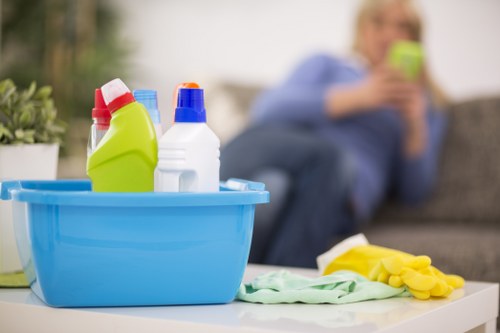 A safe workplace also depends on good housekeeping. Cleaning tools, cords, buckets, and products should be stored in an orderly way to reduce trips, spills, and damage. Access routes must remain clear, and any obstructions should be removed or reported quickly. If a job cannot be completed safely, it should be paused until the risk is addressed.
Risk Control and Safe Working Practices
Before starting work, cleaners should assess the area for hazards such as wet floors, broken glass, unstable furniture, poor lighting, or exposed electrical items. Risk assessments do not need to be complicated, but they should be practical and focused on the actual conditions present. Special attention should be given to areas where members of the public, residents, or building users may be moving through the space.
Safe cleaning procedures include using the right equipment for the task, applying chemicals according to instructions, and avoiding overfilling containers or mixing products inappropriately. Ventilation should be maintained whenever possible, and spills must be dealt with promptly using suitable methods. Staff should be trained to recognise warning labels and to handle products with care.
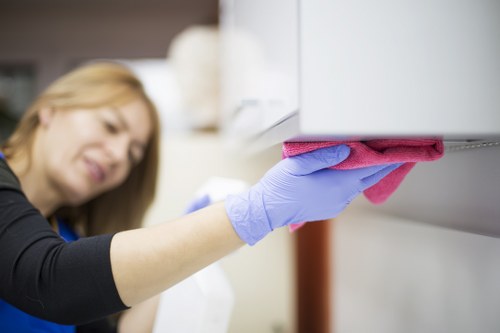 Manual handling is another key area of concern. When lifting bins, moving furniture, or carrying supplies, cleaners should use good posture, bend at the knees, and ask for help with heavy or awkward items. Repetitive tasks should be varied where possible to reduce strain. Health and safety for cleaning teams improves significantly when workers are encouraged to stop and reassess before attempting difficult movements.
Equipment, Chemicals, and PPE
All equipment used by professional cleaners must be suitable for purpose, maintained in good condition, and checked regularly for signs of wear or fault. Damaged cords, loose fittings, or malfunctioning devices should be removed from use immediately. Electrical safety is particularly important when working with vacuums, scrubbers, or any powered tool in damp environments.
Chemical products must be labelled clearly and stored securely away from unauthorised access. Cleaner training should cover dilution, contact time, safe application, and disposal. Where required, personal protective equipment such as gloves, aprons, or eye protection must be worn and kept in usable condition. PPE is only effective when it is fitted properly and used consistently.
Teams should understand that cleaning health and safety is not limited to visible hazards. Exposure to irritants, prolonged standing, repetitive movement, and stress can all affect wellbeing over time. Regular breaks, suitable footwear, and sensible task rotation all help to maintain safe and sustainable working conditions.
Incident Reporting and Emergency Response
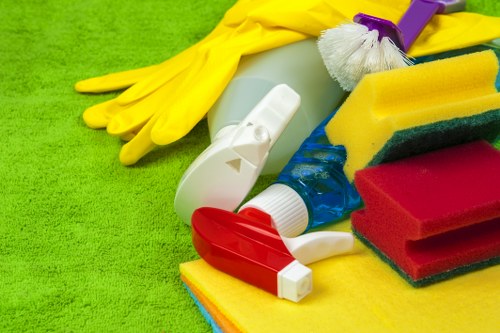 If an accident, near miss, spill, or equipment failure occurs, it should be reported as soon as possible through the appropriate internal process. Prompt reporting helps prevent repeat incidents and allows corrective action to be taken. Any serious injury or unsafe situation should be escalated immediately, and work should stop if there is any doubt about safety.
Emergency procedures must be understood before work begins. Cleaners should know how to respond to fire alarms, medical incidents, chemical exposure, and evacuations. Where first aid support is available, staff should know its location and how to access help quickly. Calm, clear action is essential in any emergency.
Managers should review incidents and near misses to identify trends, improve training, and strengthen control measures. This review process supports continuous improvement and helps ensure that safe cleaning standards remain current and effective. A responsible safety culture depends on learning from experience rather than repeating avoidable mistakes.
Training, Review, and Ongoing Compliance
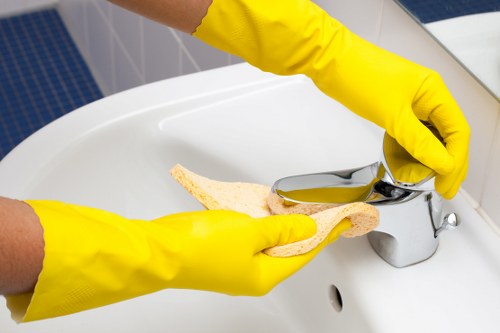 Training is a central part of this policy. All workers should receive induction training, task-specific instruction, and refresher updates when procedures or equipment change. Records of training should be kept to confirm that staff have the knowledge needed to work safely. Competence should be checked through observation, supervision, and practical feedback.
Compliance with this policy is expected from all team members, regardless of experience. Failure to follow safety procedures may place people at risk and may lead to further action. The policy should be reviewed regularly to ensure it remains suitable, particularly when working methods, premises, or equipment change.
Ultimately, cleaners Kingston upon Thames contribute to healthier environments when they work with care, consistency, and professionalism. By following this policy, cleaning teams help protect themselves and others while delivering reliable services in a safe and responsible way.